Finding the Right Path

One of the most difficult equations I’ve tried to solve is knowing what area I should dedicate my life to.
There are nearly infinite career paths, but more importantly, nearly infinite life paths that you can go down.
The problem is that we’re only exposed to a limited number of those paths through our family, our friends, and the people around us. Because of that, we tend to choose from a very narrow window of opportunities.
But when you begin to realize just how many possibilities actually exist, the decision becomes much harder.
You could become a monk. You could start a business. You could surf for a living. You could make erasers for pencils. You could become a scientist, a doctor, a lawyer, or spend your days pulling weeds from plants.
You can do nearly anything.
Every one of those paths has its own rewards, satisfactions, costs, and tradeoffs.
So from this enormous landscape of possibilities, how does someone know which opportunity is the right one?
I think most people answer that question by choosing from the opportunities they’ve seen throughout their lives. They don’t really consider all possibilities because they haven’t been exposed to them.
Maybe having only a small view of what’s available actually makes the decision easier. But once you become aware of just how many different lives you could live, choosing becomes much more daunting.
Kinds of work

One way I’ve started thinking about this is by classifying different kinds of work.
I haven’t done enough research to build a complete framework, but there are some useful distinctions.
There are roles centered around building and others centered around maintaining. There are roles that primarily require sharing ideas or teaching. There are roles that mainly require speaking, others that mainly require physical work, and others that are mostly thinking. There are highly collaborative jobs and largely solitary ones.
Take software engineering.
As an individual contributor, much of the work is thinking. There is collaboration, but long stretches of solitary problem-solving are normal. It requires relatively little speaking and very little physical work outside of typing.
Compare that to my first job.
When I was around ten or eleven years old, I pulled weeds from plants at a nursery.
That work required almost entirely physical effort. Very little thinking was necessary. I could listen to music or audiobooks while I worked. It was completely solitary, and I wasn’t building anything. I was maintaining.
I think these classifications are interesting, and I’d like to explore them further because they’re another way of understanding the kinds of work that exist.
Clues
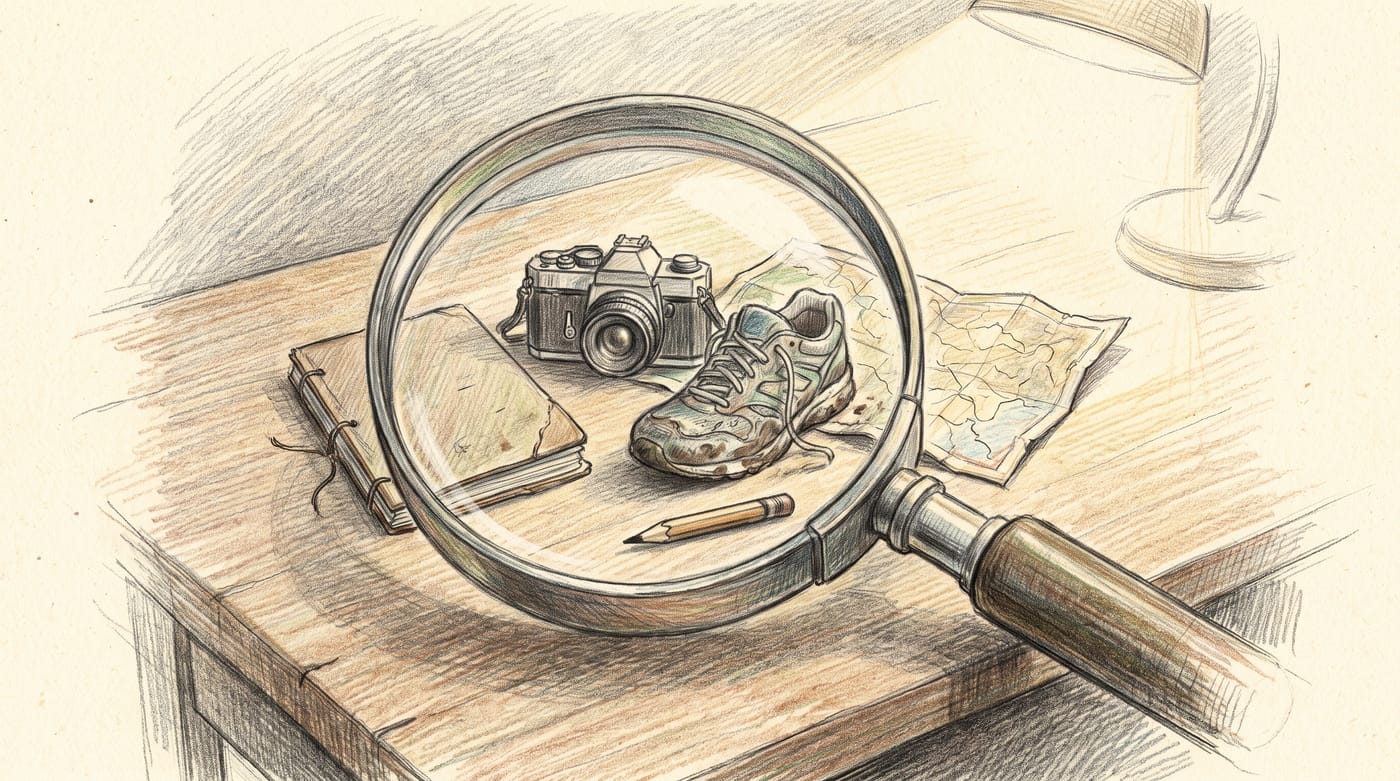
When it comes to choosing a path, I think two things are particularly useful.
The first is your experience.
If you’ve had different jobs throughout your life, pay attention to them. You may discover that you’re naturally better at certain kinds of work than others. Those experiences leave clues.
The second is curiosity.
Pay attention to the things you’re naturally drawn toward. The topics you research on your own. The projects you can’t stop thinking about.
Those are clues too.
Not the whole picture.
But clues.
The map is not the terrain
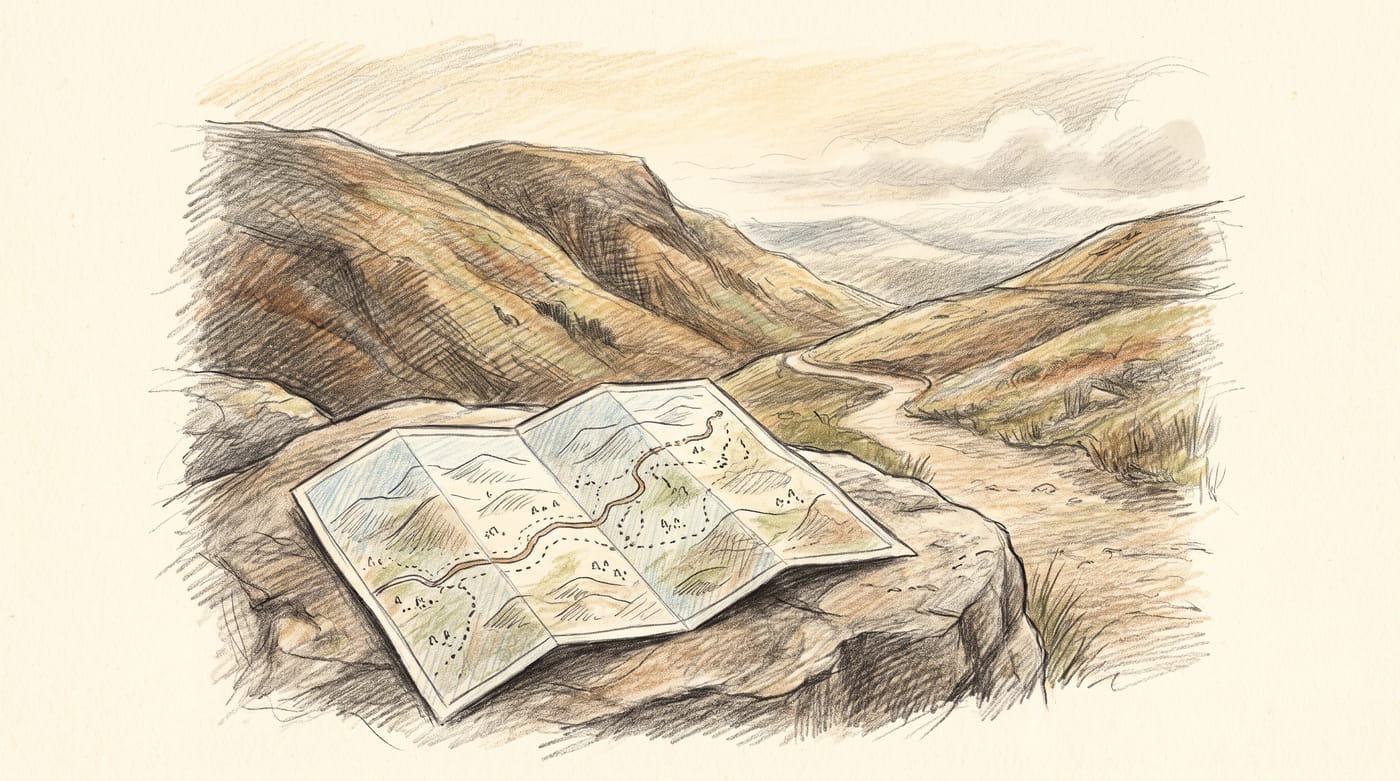
More important than making these decisions from a distance, though, is actually experiencing the work.
Choosing a career from the outside is like pointing to a place on a map and saying, “I want to go there.”
The map shows you the destination.
It doesn’t show you the terrain.
It doesn’t tell you what the work feels like every day, what sacrifices it requires, or whether you’ll actually enjoy doing it.
Because of that, every career decision you make beforehand is incomplete.
So first, survey the landscape. Choose a few paths that genuinely interest you. Lead with curiosity. Read about them. Watch videos. Listen to people already doing the work. Learn what their lives actually look like.
Then take the next step.
Volunteer. Do an internship. Shadow someone. Find some way to experience the work directly.
That’s your first real taste.
If your curiosity survives that first exposure, then eventually you have to commit.
Spend a year. Maybe several years.
Only after you’ve genuinely immersed yourself in something can you really decide whether it’s right for you.
And if it isn’t, you can always change.
Hopefully by then you’ve made an educated decision, and even if it isn’t your final destination, it’s a meaningful step in the right direction.
The clues were there all along

Looking back on my own life, I see clues that I completely missed at the time.
Whenever I had an idea — whether it was a YouTube video, an application, a film, or some project in my room — I naturally broke the vision down into smaller steps. Then I either started working through those steps or learned whatever I needed to accomplish them.
I didn’t think much of it. It was simply how my mind worked.
Only years later did I realize that this habit naturally lends itself to engineering, which is what I do today.
Looking back, the clues were there all along.
Your mental habits, your physical habits, your curiosities, and your interests are some of the best indicators of what you might enjoy and what you might become good at.
Not certainty. Not proof.
But clues.
This is the best I’ve been able to glean from my own path so far.
Hopefully there’s a small idea here — a few useful tidbits — that help you better find the areas where you should spend your own life.